Ending Protein Deficiency
in the Global South

Protein deficiency doesn’t just stunt growth — it steals futures.

Protein Deficiency and Nutrition

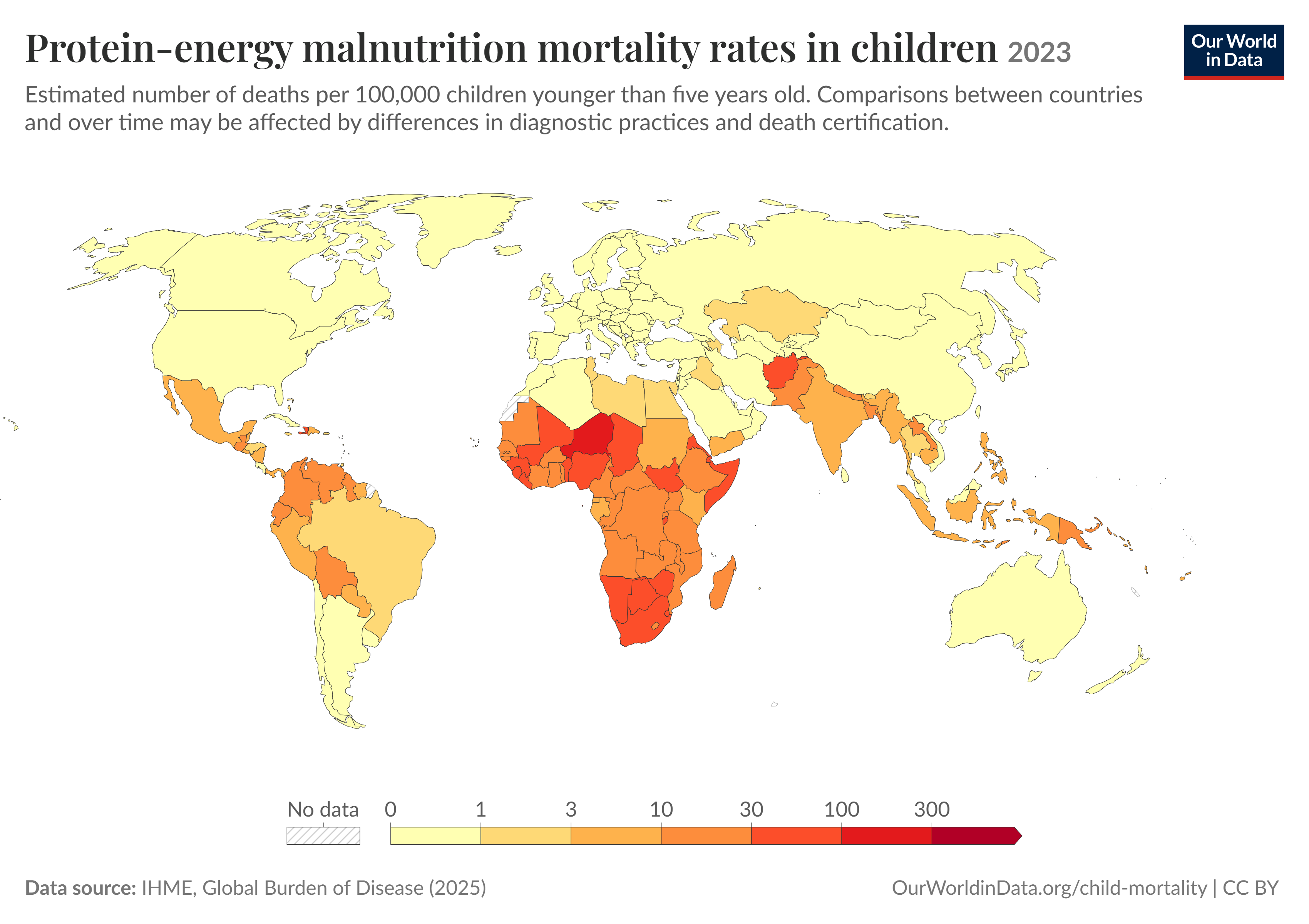
Malnutrition remains one of the most persistent public health crises of our time. In 2024, the global undernourishment rate stood at 8.2 percent, with roughly 733 million people affected by malnutrition worldwide as of 2023. Malnutrition isn't simply about too little food; it's about food that fails to deliver the nutritional building blocks essential for a healthy life.

Protein deficiency carries consequences that ripple far beyond hunger itself. Inadequate protein intake during childhood is closely tied to stunted physical growth, weakened immune defenses, delayed cognitive development, and reduced educational and economic potential later in life.
Training Centre

This is a Serious Problem

Without reliable access to affordable, high-quality protein, millions of children face lifelong consequences: weakened immune systems, impaired cognitive development, poorer school performance, and reduced economic potential as adults.

~50%

of all deaths in children under five are linked to undernutrition

These deaths occur mostly in low and middle-income countries where access to affordable, high-quality protein is limited.

150.2M

Children under 5

are stunted globally — too short for their age due to chronic undernutrition

42.8M

Children under 5

suffer from wasting (too thin for their height)

12.2M

Children under 5

suffer from severe acute malnutrition (SAM), greatly increasing risk of death from common infections

62M

Stunted children

live in sub-Saharan Africa alone — the highest regional burden in the world

Sources: UNICEF-WHO-World Bank Joint Child Malnutrition Estimates (2025) & WHO Malnutrition Fact Sheet

Challenges With Protein Production

One of the most significant challenges that we face in trying to address the world's lack of protein is that the world cannot sustain the increase in conventional animal-based protein that is required to fill this demand. This is particularly the case in countries suffering from drought in which scaling beef or poultry production is not possible.

Water & Land Availability

Per kg of protein produced, cricket protein requaires up to 99% less water than beef and 50% less than chicken.

Shelf Stability

We establish NGO-run training centres and central demo farms that teach smallholder farmers — particularly women — how to raise crickets using low-tech, climate-resilient methods suited to local conditions.

CO2 Production

As local production scales, we help communities develop export-grade products that meet international food safety and quality standards (supported by Entomo Farms’ expertise).

Insect Protein as a Solution

Solving this problem requires more than aid, it requires scalable, locally rooted food systems that can keep pace with growing populations and shifting climates. Insect farming offers a uniquely well-suited answer for the regions carrying the heaviest nutritional burden. Insects like crickets and black soldier flies deliver protein quality comparable to conventional livestock, often with far lower requirements for land, water, and feed, and they can be raised in small-scale, low-cost operations that fit directly into the communities that need them most. By building local capacity for insect protein production, we can help close the protein gap where it's widest, not through imported solutions, but through a food source that's efficient, resilient, and within reach of the farmers and families who stand to benefit.

Training Centre
💧

99% Less Water

Producing 1 kg of cricket protein requires up to 99% less water than beef and 50% less than chicken.

🌱

12x Less Land

Crickets need only a fraction of the land required for traditional livestock — making them ideal for densely populated or arid regions.

♻️

Low Greenhouse Gases

Insect farming produces 100 times fewer greenhouse gas emissions than beef and significantly less than pork or chicken.

Highly Efficient Feed Conversion

Crickets convert feed into protein 12 times more efficiently than cattle and 4 times more efficiently than pigs.